Plano, TX · Collin County
Basement Water Damage Restoration in Plano, TXBasement Water Extraction & Basement Drying Services
Basement Water Damage Restoration in Plano runs from basement water extraction and basement floor water removal to basement dehumidification.
Answered 24/7
Expert Basement Water Damage Restoration Serving Plano
Basements collect water from every direction: rain seeping through walls, groundwater pushing up through the slab, sewage backing up through floor drains and pipes bursting overhead. In a Plano home with a basement or below-grade room, any of these can leave inches of water on the floor.
Few homes in Plano have basements, so this work usually covers the lowest part of a home: a sunken room, a below-grade garage, a utility room or a crawl space.
A finished basement or lower level in Plano or Murphy, Richardson and Allen can hide old moisture behind drywall and flooring. The pros find the water and dry the space before more damage sets in.
The Basement Water Damage Restoration Process in Plano
Basement Water Extraction
Submersible pumps remove deep standing water, then portable extractors pull water from carpet, pad and the concrete floor.
Basement Drying Services
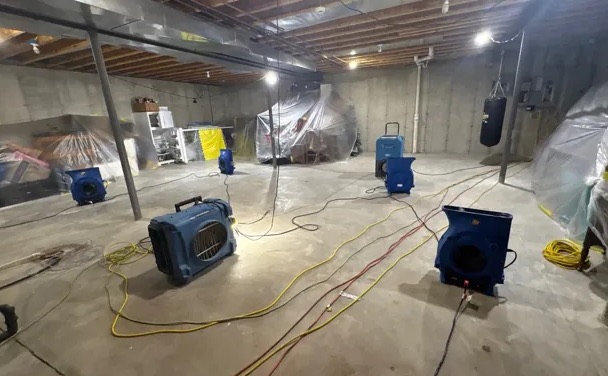
Air movers and dehumidifiers are placed to dry walls, framing and the slab. Below-grade rooms dry slowly, so readings are taken daily.
Basement Dehumidification
A basement with no moisture problem before the flood may still need a dehumidifier afterward while the concrete dries.
Basement Sewer Backup Cleanup
Sewage that backs up through a floor drain or toilet is extracted with protective gear, and the area is contained from the rest of the house.
Emergency Basement Flood Cleanup
Emergency cleanup starts with stopping the source where possible, checking for electrical hazards and pumping out the water.
Signs of Basement Water Damage in Plano
Mold on Surfaces
Dark spots on drywall, framing or stored boxes mean the area has stayed wet for days.
Rusted Appliances or Pipes
Rust on the water heater, furnace base or pipes points to repeated moisture or past flooding.
Peeling Paint or Wallpaper
Paint that peels or blisters on basement walls often has moisture behind it.
High Humidity Levels Below-Grade
A basement that stays damp and clammy even on dry days has a moisture source that needs attention.
How Basement Water Damage Restoration Works in Plano
Step 1: Water Removal
Pumps and extractors remove standing water from the basement floor, starting at the lowest point.
Step 2: Targeted Moisture Evaporation
Air movers are aimed at wet walls, framing and the slab to speed evaporation.
Step 3: Humidity Control
Large dehumidifiers pull moisture from the basement air, with readings checked every day.
Step 4: Final Verification and Restoration
Final readings confirm the basement is dry, and the space is ready for drywall and flooring repairs.
Typical Sources of Basement Water Damage in Plano
Clogged Floor Drains
A floor drain blocked by debris cannot carry off water from a leak or overflow, so it spreads across the basement floor.
Faulty Basement Waterproofing
Old or failed waterproofing on foundation walls lets water through during wet weather.
HVAC Condensate Line Overflow
A clogged furnace or air conditioner condensate line can overflow onto the floor of a basement or lower-level utility room.
Stormwater Runoff Into Lower Levels
Heavy rain running off hard ground or a sloped yard can pour down stairwells and under doors into below-grade rooms.
Basement Water Damage Restoration for All Properties in Plano
Residential Basement Water Damage Restoration
In homes, a flooded basement often means damaged carpet, drywall, a furnace or water heater and stored belongings. Water is pumped out, contents are moved and the space is dried.
Commercial Basement Water Damage Restoration
In commercial buildings, basements hold mechanical rooms, storage and sometimes offices. Water is removed and equipment areas are dried so systems can be checked and restarted.
DIY vs. Professional Basement Water Damage Restoration in Plano
Fans alone can push damp air into the rest of the house. Basement drying needs dehumidifiers to pull the moisture out of the air and the concrete.
Cost Considerations for Basement Water Damage Restoration in Plano
A basement pumped and dried right away in Plano usually costs less than one left wet for days, when more drywall and flooring are lost.
Affected Square Footage
Larger basements need more extraction, more drying equipment and more days of drying time.
Dehumidification Needs
Large dehumidifiers may need to run longer in below-grade spaces than in upper floors.
Material Saturation
Finished basements with carpet, drywall and insulation take more removal work than bare concrete.
Does Insurance Cover Basement Water Damage Restoration?
Coverage for groundwater seepage and backups varies widely between policies. Ask your adjuster whether your policy includes it before work begins.
The Value of Local Pros for Basement Water Damage Restoration in Plano
Mold Prevention Focus
Fast drying is the main way to limit microbial growth in a below-grade space.
24/7 Emergency Response
Help is available day or night when water is rising in the basement.
Detailed Documentation
Photos, readings and drying logs are kept to support your insurance claim.
Emergency Basement Water Damage Restoration Available in Plano
Storm night, weekend or holiday, local water damage pros handle flooded basements in Plano. Call (817) 799-6732 to get the pumps running and the water out.
Call Now (817) 799-6732Regions Served for Basement Water Damage Restoration Near Plano
Help with basement water damage restoration reaches Murphy, Richardson and Allen, plus other communities around Plano, for finished and unfinished basements alike.
- Basement Water Damage Restoration in Murphy
- Basement Water Damage Restoration in Richardson
- Basement Water Damage Restoration in Allen
- Basement Water Damage Restoration in Garland
- Basement Water Damage Restoration in Lucas
- Basement Water Damage Restoration in Addison
- Basement Water Damage Restoration in Carrollton
- Basement Water Damage Restoration in The Colony
- Emergency Damage Restoration in 75023
- Storm Damage Restoration in 75023
- Water Damage Restoration in 75023
- Water Extraction Service in 75023
- Water Leak Detection in 75023
- Water Removal Service in 75023
- Emergency Damage Restoration in 75024
- Storm Damage Restoration in 75024
Frequently Asked Questions About Basement Water Damage Restoration
Does basement mold prevention need special steps after flooding?
Fast drying is the main step. Wood and concrete that stayed wet can be treated with an antimicrobial once dry.
What health risks come with delayed basement flood cleanup?
Standing water and wet materials can support bacteria and microbial growth, and sewage carries contaminants that need disinfection.
How long does below-grade drying take after a flood?
Often several days or longer, since concrete and cool basement air dry slowly. Daily readings show progress.
What does below-grade moisture removal include beyond pumping?
Extracting carpet and pad, opening wet walls, running air movers and dehumidifiers, and checking readings until dry.
How is basement sewer backup cleanup different from regular flooding?
Sewage carries bacteria, so it needs protective gear, removal of porous materials and disinfection before drying.